



How To Effectively Clean Different Types Of Flooring
Keeping your floors spotless can instantly transform the look and feel of your home. Whether it is warm timber, glossy tiles or soft carpet under your feet; every flooring type has its own cleaning needs. Using the wrong method can lead to scratches, stains or even long term damage. This can lead to costly repairs simply because of a cleaning mistake.
This becomes even more important when you are moving out of a rental property. Landlords closely inspect floors during the final checks and marks or grime can risk your bond. That is why many tenants rely on professional end of lease cleaning Wollongong services to ensure every surface looks as good as new. But if you prefer hands on approach, here is a practical guide to cleaning different types of flooring effectively and safely. With the right techniques and a little care, you can keep every type of flooring clean, well maintained and inspection ready.
Hide
Show
- Essential Cleaning Supplies for Different Flooring Types
- Cleaning and Maintaining Hardwood and Timber Floors Safely
- Effective Methods for Cleaning Tile and Grout Floors
- Deep Cleaning Techniques for Carpeted Floors
- Proper Care and Cleaning for Laminate and Vinyl Flooring
- Specialised Cleaning for Stone and Marble Floors
- Infographic For Cleaning Tips For Different Floor Types
- Wrapping Up
1. Essential Cleaning Supplies for Different Flooring Types
Before you start cleaning any floor, make sure you have the right tools and products.
- Microfibre mop
- Soft broom or dust mop
- Vacuum cleaner with multiple attachments
- pH neutral floor cleaner
- Wood safe cleaner
- Tile and grout brush
- Carpet stain remover or spray solution
- A steam cleaner or carpet shampooer
- Stone safe cleaner
- Clean cloths or sponges
2. Cleaning and Maintaining Hardwood and Timber Floors Safely
Hardwood floors, add elegance and warmth to any space but they are sensitive to moisture and harsh chemicals. Daily maintenance should start with dry cleaning methods such as sweeping with a soft broom or using a microfibre dust mop. This helps remove dirt and grit, which can act like sandpaper and cause scratches over time.
For deeper cleaning, use a damp mop with a pH neutral wood floor cleaner. Avoid soaking the floor; excess water can seep into the wood and cause swelling or warping. Always wipe spills immediately, and consider placing rugs in high traffic areas, to protect the finish.
3. Effective Methods for Cleaning Tile and Grout Floors
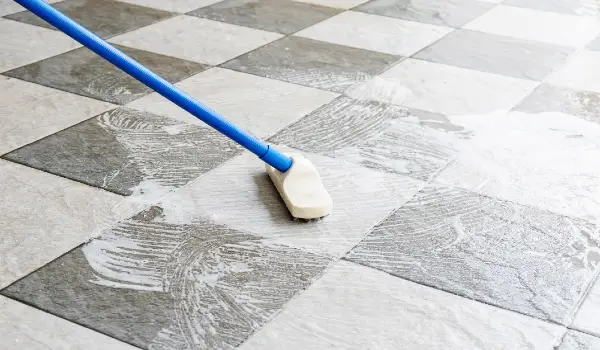
Tiles are known for their durability, making them common in kitchen, bathrooms and hallways. Regular vacuuming or sweeping removes dust and debris while mopping with warm water and a mild detergent keeps the surface fresh. Because tiles are water resistant, you can clean them more thoroughly than timber, but avoid overly abrasive scrubbers that might dull the finish.
Grout, however requires extra attention as it easily traps dirt and stains. Use a paste of baking soda and water or a specialised grout cleaner; scrubbing gently with a small brush. Periodically sealing the grout lines, can also prevent future staining and make maintenance easier during end of lease cleaning Wollongong inspections.
4. Deep Cleaning Techniques for Carpeted Floors
Carpets create a cosy atmosphere but tend to collect dust, allergens and stains quickly. Vacuum at least twice a week, especially in busy areas, to prevent dirt from settling deep into the fibres. Slow, steady vacuum passes are more effective than quick ones.
For stains, act immediately by blotting, never rubbing, with a clean cloth and a mild carpet solution. Steam cleaning or hot water extraction every 6 to 12 months helps remove embedded grime and refresh the carpet. This step is particularly important during move outs, as professional end of lease cleaning Wollongong services can make carpets look nearly new and help meet inspection standards.
5. Proper Care and Cleaning for Laminate and Vinyl Flooring
Laminate and vinyl floors are popular for their affordability and low maintenance. They mimic the look of wood or stone while being more resistant to scratches and moisture. Regular sweeping or vacuuming prevents dirt buildup that could dull the surface over time.
When mopping, use a lightly damp mop and a gentle cleaner specifically designed for laminate or vinyl. Too much water can seep between seams and this can cause lifting or bubbling. Avoid wax based products as they leave residue and make the floor slippery. Simple, consistent care is usually enough to keep these floors looking great.
6. Specialised Cleaning for Stone and Marble Floors
Natural stone and marble floors offer luxury and durability but they require specialised care. Because these materials are porous; they can easily absorb spills and develop stains if not sealed properly. Start with daily dust mopping, to remove loose debris that might scratch the surface.
Always use cleaners formulated specifically for stone surfaces. Acidic products like vinegar or lemon can etch and damage marble permanently. Sealing the stone periodically provides an extra layer of protection and makes routine cleaning much easier. With the right care, stone floors can last for decades while retaining their natural shine.
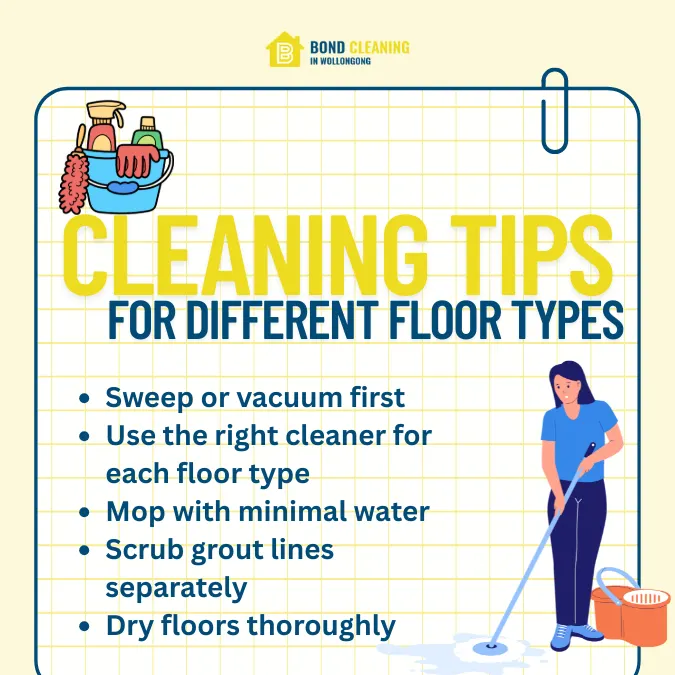
Infographic For Cleaning Tips For Different Floor Types
Wrapping Up
Different floors demand different cleaning techniques and understanding these differences can save you both time and money. From gentle care for hardwood to deep steam cleaning for carpets; using the right methods ensures your floors remain attractive and long lasting. Whether you’re maintaining your home regularly or preparing for a move, consistent cleaning makes all the difference.